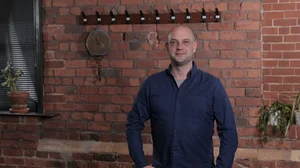
Does Transformation End Where Product Operations Begins? | Victoria Sheer
In episode 20 of Talking Roadmaps, interviewer Justin Woods speaks with Victoria Sheer about why product transformations fail when strategy is treated as an afterthought. They unpack how product operations connects strategy, value, and execution, why “copy-paste Agile” misses the point, and how organisations can measure real P&L impact. The conversation reframes product ops as a strategic enabler, not a process function.
Victoria is an experienced, hands-on product leader with over 10 years of experience across Product Strategy, Product Operations, and Head of Product roles. She built the Strategy & Operations function at ALDI Süd from the ground up, driving cross-functional alignment and scaling product delivery across multiple markets. With a career spanning the energy, FMCG, and retail industries, Victoria combines strategic vision with operational rigour to deliver measurable impact. She also advises startups and scaleups on go-to-market and growth strategies, helping teams turn great ideas into scalable, customer-driven products.
Here is an audio-only version if that’s your preferred medium - and you can access it through your favourite podcasting platform if you prefer (Apple, Spotify, Amazon).
In the next episode we have Dan Dalton, Director of Product @ Sage. So watch out for episode 21!
-
- And I think product operations is what is left when transformation is done. But while you are doing transformation, you also need people who are doing and improving operations. So for me, this can be the same people, or it might be transformation a bit more senior, sometimes than when it's already in more mature state, but you cannot do one without another. I think transformations fail because strategy is not getting any attention, or much attention, or because it's transformed in the end. You need to start with it. It's the most painful thing. It's the most time consuming and the most alignment in it, because lot of top management are involved there. And if you just ditch it because it's hard, you will never succeed and you will just waste a lot of money.
- Welcome, everybody to Series Two of "Talking Roadmaps." Where we're talking about product operations. And my special guest today is much more than just product operations. She's led a number of different strategic transformations and worked in strategy and operations herself. Victoria, please introduce yourself.
- Thank you, Justin, and I'm very happy to be here. I have 12 years of experience in the industry. So directly after university, which was I started IT Strategy, I started working as a product manager. I've worked in the product management in B2B SaaS, and then afterwards, I moved to the industry. I moved to Henkel. I've worked there with different products and also projects and programmes. My last product was marketing automation. I was leading a scale product and marketing automation. And approximately, four years ago, I moved to ALDI, and I helped them to transform, to transform the IT department to the product operating model. We started with E-commerce, and then we moved to the overall IT department. Where I was supporting, especially strategy, portfolio and value-driven streams, meaning everything related to business cases, KPIs and value management from top to bottom. So how to make sure that the things which are done in teams, and we are talking about hundreds of teams, actually connect to our strategy, and how can we actually measure the impact.
- If you're enjoying the channel, subscribe, hit the bell icon, and give us a like. Fantastic! So a load of hands on experience in product leadership, in strategy, in making these transformations, and, of course, product operations as well, which is why we're so thrilled to have you on Series Two of the channel. And so, I think I might just jump in with kind of the obvious question, maybe, which is, from your perspective, what's the purpose of product operations?
- It's a tricky question, because it's very much depends on how you define product operations, but let's stick with the processes. And as I said, I was for I think it means around seven, eight years I was a product manager, and I was growing, and my product was growing, so I had more users, I had more budget, I had more impact. And still, compared to the overall impact of a whole company, because Henkel, for example, is a huge company, right? My impact on the P&L was very, very limited. Which is, okay. I mean, I'm a small person at a big company, like, everything is right. And then, but I always love the big picture, I always like connecting the dots, I think that's my strongest point... My strongest side is about connecting the dots to understanding how it all should work together. And that's how I realised that actually optimising processes and optimising how we all work together in the end, if done right, might have much bigger impact on P&L than any product in the organisation. And this is for me, product ops.
- Right. Yeah, of course. And so why do companies need product operations?
- Because we don't live in the ideal world where every team can just operate at their... Alone, at the best performance, and still deliver the results. It just doesn't work. We are like organisation, companies, like a small society, and we're all dependent on each other, right? And that's the point, and product operations helps to create and manage those dependencies, which are, I think, the hardest part of working in a big organisations. Everyone will tell you it's politics and alignment, which I translate into dependencies, which you need to manage somehow, and product operations help you do it.
- Yeah, amazing. Product operations isn't there just to serve the product management team. Product operations is there to serve the business. And so that's what you're looking at from that perspective. And I think what was interesting is that you built the strategy and operations team so you weren't predominantly just product operations. You actually looked after the strategic element of it as well. How did that help your role, do you think, having strategy and product operations together?
- I was responsible to support our strategy leads to come up with a strategy. What does it mean? Is that you think that every organisation has a very clearly, well-defined strategy, which everyone is know, does know about, and follows. This is what your assumption. This was my assumption. But it's not the case in a lot of organisations, unfortunately. And this organisations can be like multi-million organisations. It's still not exactly the case, because power of strategy is strategy which is actionable, which is clear and which is communicated. And this is how my role came into place, is to actually, if you want to steer the ship, and I was managing on steering on KPIs, and how it all comes together, you need to know where you are steering, and this is where the strategy piece, right?
- Yeah, totally makes sense. And in fact, that ties in with my own experiences. And actually, even within roadmapping, you know, it's so important, it already comes down to strategy. I didn't have clear strategy. Sometimes when I was a product manager, I had to create my own at my level. I didn't know what good looked like, so I had to kind of think about what best guesses were. The strategy is so important. It's the shepherding, it's the direction, it's the rudder, you know, of the ship, not just the oars are pushing it forwards. And it's so vital. It's also incredibly important for decision-making, for prioritisation, and for saying what we will and won't work, that will and won't look at. So I love the fact that you kind of looked and were able to influence strategy in that role, as well as the operation side of things. I kind of see strategy as being the direction and operations is making it more efficient to get there, which is super cool as being part of the same role. I guess, from your perspective, what were some of your key responsibilities of product operations? You mentioned processes, but product ops gets a bad rap for being the process police. It's much more than that, isn't it?
- Yes, and I think also the challenge is that... That's why I always say, okay, but you find the product ops because very often organisations believe the product Ops is about analysing customer feedback, and data, and bringing this data to product managers, or being one to one counterpart for product managers, and sometimes doing like boring tasks which product manager doesn't want to do that different things, what product operations are usually doing. In my case, I was working more than with the leadership. So it means that I was working with hundreds of teams, so it was impossible for me to do those things which I just said, right? So I needed to create systems that the teams could operate in, and I needed also to coach them, and to develop a methodology which also is clear enough, and then also bring it to them together with my team. All these goals, so for me was we had a big vision, what we want to achieve as organisation, and the word value was like, every second word in this whole vision and this whole strategy, like we want to bring value and want to do well. And then if you ask people, "Okay, what is value?" No one could really answer. So, my job was to answer it in a very clear way, meaning develop a KPI system, develop a way how do we measure it, when do we measure it, and how do we connect everything we do to.
- Nice. That's such a good answer. And actually, that's a really nice lead in to my next question, I hope, which is, how do you see product ops evolving beyond operational excellence, which clearly you've done, and moving more into strategic enablement? And I feel that value is part of the key part of that discussion.
- So, what I mean is it that product operations, for me, is a product. And it needs to be strategic. And it is, I think, what in a lot of cases, it's missing in a lot of organisations, it's not strategic. 12 years ago, when I was doing my master in IT Strategy, they taught us that there's different connections between IT and the business. And IT can be enabler, IT can be a driver, and so on. So product operations, for me, is enabler of a business, and in this case, business and the product teams. And to enable them, they need to understand their strategy, and they need to understand the bottlenecks, and they need to also themselves evaluate and understand what they can improve. So this is, for me, product operations. It's a very liquid role, but which needs to have a lot of strategic understanding of why we actually do this, because that's why I have to... I really hate to say it, but I really don't like so much Agile, Scrum, and all of this especially advocates for this, because these people, very often, they kind of follow cargo code. We follow a lot of procedures which are there, but in the end, always ask yourself, how does it help the strategy? What does it bring? How can I transform every action I do in the money? And I don't want to hear processes, process work, support work, no we cannot transform it into money. It's just support. It's not a value adding tasks, and some support tasks, but product are actually the ones who are doing the P&L. I don't believe it. I believe in every organisation, everything can be transformed into money. So try doing it and stop wasting it.
- Totally. I think there's a huge round of applause going on in the audience watching this at the moment, I fully agree. I love your thought that you manage things like a product. I'm fortunate enough to be a company owner. You're working on some side projects. You'll be managing those like a product. I manage my own health like a product, and I'm doing little experiments on monthly, quarterly basis to see if I can improve things. I think that product mindset is so, so powerful when it's applied in this way. So I love to hear that that's what you've been doing, treating it like the product and using that mindset. What kinds of strategic decisions can product ops directly influence, even if they don't own them? Is that something that you've seen? I think product operations can influence any of product decisions, but can influence doesn't mean that they are the final decision makers, right? So you have this race here, which means responsible, accountable, consulted and informed, right? And the product operations, in everything related product, they are not accountable, and very often they're not responsible, but they are very, very often consulted. And so your main product operations goal is to be very trusted advisor in those things, because you also understand the big picture. And you sometimes know things which your product owner, which is maybe very deep in one product doesn't see. So your role is to bring it and to support them in their decision making process.
- Yeah, that makes sense. And so I guess a follow on to that question is, what role can product ops play in broader company transformation initiatives, if they don't own them and they're influencing, how can product operations, or can even product operations be involved in those broader company transformation initiatives and provide that value.
- Well, I think product operations, is because I was more at actual transformation side, right. And I think product operations is what is left when transformation is done. But while you are doing transformation, you also need people who are doing and improving operations. So for me, this can be the same people, or it might be a transformation a bit more senior, sometimes than when it's already in more mature state. But you cannot do one without another and usually if you just bring product operations to the very traditional organisation, organisation which is not really following the product mindset, just bringing product operations would not help change it, because what you need is first to transform. This very, very painful thing you need to do, and you need to put some attention to it, right. So if you just say, given our product operations, and we renamed all our project managers into product managers, now we are transformed.
- It's so true, it's funny. And actually, that's the voice of experience, right? You've been through multiple transformation programmes in your time. I can hear that experience and kind of some of that, the truths coming through there. As you've been through so many multiple transformation programmes, what's often been missing from those efforts? What's caused them to succeed or maybe fail, what's missed out?
- Well, I would not say speak exactly to what exactly missed out in my experiences, but I can give you, from my opinion, the key ingredients which we need to have to transform. First of all, you need to have very right leadership. A leadership mindset. Very often, unfortunately, you cannot keep your whole leadership team which you had before. And this, I think, is one mistake which a lot of companies do. They just say, okay, we will just go to three day leadership training, and now we're transformed. You need to have at least one person in the leadership who is truly behind it and who already truly saw it. This is one important thing. Then we need to understand that transformation is, is kind of painful, and you need to give it a bit of time, but you should not give it too much time. So it means, it's a mix of tough love, right? So it's like, you want to coach people, you need to help them, but you also need to have some mechanisms to make it a bit tough sometimes. It's like to create some sense of urgency, right? If you follow also like Kotler model, you need to like, make people kind of follow you, if they don't follow you by default, because people don't like change.
- That's been one of the hardest challenges for me as kind of working in implementations of my work alongside product transformations, where tooling is brought in as part of that. It's surprising how people in organisations that deliver change, like product managers, and IT, and development and things like that, are actually resistant to that change. It's so funny.
- Unfortunately, yeah, but I think most of people don't want change. I think you need to expect, like five percent of people really want to change, and others don't. And then you need to kind of grow this amount of people to 20, 30% and they would follow you because they believe in your mission, and your vision, and your strategy. And then others will kind of follow afterwards. So this is also, I think important lesson. What you need to have clever people who don't want to just implement processes. I think the people, I don't want to say like me, but it is the mindset that everything you do is connected to strategy, and how can I make it work? How can I create business case for the things I'm doing? These are the people you need to have, because if you just hire a lot of Agile, Scrum Masters, coaches and so on, who will just follow the methodology, you will become a very expensive organisation, because every process costs money. Every process costs money, every implementation of the process costs money, and you might not make any money with it, even if you're now doing Scrum instead of Waterfall. It might just be that it's not beneficial for you, because you just read processes but you are didn't connect it to the whole value piece of it.
- Yeah, totally. You know, how many times have we seen companies do that copy and paste Agile, or copy and paste that company made that framework successful, so if we have that framework, we're successful. They've lost the strategic context, they've lost the leadership, they've lost the direct, you know, the direction of those things is fascinating. You know, I like frameworks and processes, but they need to be done with context, and they also need to be looked at with what works well for us and what doesn't, what we're going to choose to keep, and what we're going to choose to reject. And so, I totally buy into what you've seen there, is that the framework or the process isn't the solution there. And actually, I'd like to pick up on kind of like, one of the things that you touched on earlier, which I'm actually quite passionate about, which is, why do you think... You mentioned about turning everything into a profit centre, I totally agree. I don't think there are revenue making departments and cost centres within companies. I think all of them have a blend of the ability to affect the bottom line. Why do you think some transformations fall short of turning IT or product into true profit centres? I think that ties in with what we were talking about just now. What does it mean being a profit centre? You can create revenue streams for the organisation, or you can at least cut costs. And I think this is the part where they don't fall... A lot of organisations don't fall short because they are trying to cut costs, and they use IT purely to cut costs, and already doing this is already a step forward, because it means we are not just then, we are just paying for all our tools just because we have all those tools, but there are certain strategies, there are certain mindset on how to optimise it. That's why I'm saying when we are saying when we want to optimise our cost, spend. It might well be that Agile transformation is exactly opposite to what you need, because Agile is expensive, and if you are just doing cost cutting, doing very clear contracts with you, because now talking about industry, of course, so very clear contracts with your outsource providers, give them what they need to deliver, and this is how you will save costs, right? Maybe they are also somewhere offshore, near shore, whatever. And it might will be, I'm not saying it is or not. It very much depends, but that might will be your way to cut costs. Not a job transformation. Because a job transformation is done when you want to create revenue, not just cut. I think they fell short because they mix it up. They forget about this very big piece, and then they think we will be Agile. That's how we'll cut costs.
- It's so true, that's not really the purpose of Agile at all, is it? It's agility, it's often speed of delivery. Lots of other things that I'm qualified to even say I'm not an Agile practitioner, but yeah, what I've seen is often these frameworks brought in without the context. And often when the person that's spearheading that has brought this framework in in leadership, they leave and it collapses. And one of the problems I've seen is that often the tenure or the time that a leader is in a company that does a transformation, the transformation outlives that person, and when they leave after a year and a half, two years, the transformations just starting to have caught up and start to deliver the benefits. It hasn't really delivered what it said it would do, because actually, we needed the whole operation slowed down to implement this new process before it could speed up again. And that's one of the things I've seen before.
- So this, it was very hard. Just a conclusion of everything. This should not be underestimated. This is really, really hard, and you need to have your best people at it to make it actually work.
- Yeah, totally. And that's where your role from your advising and things like that, really comes in to help companies to understand this better. So really enjoying learning from you, Victoria on this. I want to talk a couple of quick questions on product ops, because obviously that's what we're talking about in Series Two. But I wonder, what would you say, just off the top of your head, a best practise in product operations? What would somebody listening that's never really understood product operations, or they're doing it, but not formally, or they just started a zero to one type product operations role, what would you recommend as a best practise for them to think about?
- I talked to one director from Delivery Hero who are either respect in product operations, and asked them, how did you like select? What goes into your department, and so on. And there are two things. First of all, product operations need to build a reputation. Need to build trust. Because this is also, for me, was very painful part. As a product owner, you just own your product. You can deliver it. If you have your team, you can just deliver it. You don't care. I mean, you care, but not that much. As a product operations, transformation operations, whatever, all those people. They cannot deliver anything without other people. You need other people who are not your employees to follow you. So to be good product operations professional, you need to build a very good relationship, and you get reputation of being helpful. And to do this, first of all, for example, you can understand where are currently biggest pains. Treat your product owners as your customers. What are their pains? What can you offer them to start them like you?
- Yeah, that's hugely important, isn't it, especially when you need to... We've touched on earlier, you need to influence without authority and things like that. The way that we're able to do that is be helpful and develop trust with people. I think that's huge. I think that's actually very underestimated. What about a big mistake that people make in product operations? What's the opposite of that? So building trust and delivering value? What's one of the mistakes you think people make in product ops?
- Well, I can't emphasise this enough, but I can say that I saw a lot of very frustrated product managers, or actually, for at this point, any other employees who are very frustrated with transformation because they was like, it's just so complex. There's so many new processes and so many new meetings. And we know there is no lack of meetings in the corporate and now we have all of those meetings, and I just don't get how it matters. I mean, like it doesn't change what I do at all, but I need to adhere to all these new processes, which very, very, very annoying. And I think is the case, and this is, I think is the big mistake. Is what I already stressed, everything you do, think what P&L doesn't impact does it create? Why do I actually do it? And maybe, and it's very often, the answer is, yeah, because I have this department, because this department has certain role, and now I need to have a process to that. This process department is involved, because how can we not involve them? They are there and we pay them. This is where your information fails, because information is also changing the org structure, and this was changing also the roles and a lot. And if you are in an organisation where it's told you as a transformation manager, this department stays, the structure stays, as people stays, this role stays. Can you please just build process that we are Agile? The best way is just to exit this point.
- Yeah, it's huge, isn't it? The scope and the remit is absolutely massive. Victoria, I am curious whose advice you listen to in terms of product operations, strategy and transformation there. Any standout people that you kind of get value from that you can share with us to who we might learn from also?
- Well, I, of course read the book of product operations from Ms. Melissa Perri, Denise Tilles, and I was really happy to also meet Denise in person in Product Task Conference. I think she's amazing. And I think she directly follows also this idea that product operations can be strategic, and it's should be strategic, and it's not just a separation of work, it's just different aspects of product operations. I think also, I feel, also by the job openings, work operations is much more massive in the States than in Europe, especially in continental Europe, so UK, I think, has a bit more presence. So for sure, if you're like me, on a continental Europe, you need to follow some US influencers, because it's just much more mature there, and because US is much more about being making money, right, than Europe so maybe you can, .
- Yeah, that's a great answer. And any resources you recommend, you already mentioned to Denise. So we've got the product operations book by Melissa and Denise. We've been fortunate enough to have Denise on the channel. I wonder if there's any resources you'd recommend to that the "Product Operations" book, anything else you found particular value in?
- I think in digital or in product, it's a lot about combining it. So I think it's nice to read a lot of points of view. So I personally follow a lot of also experts on the field. For example, Antonia Landi, Kim Hillberg, I already mentioned, Denise, of course, Marty Cagan, and a lot of also directors of products, heads of products, which I can relate to. And then I'm trying to read a lot of points of view and create my own point of view.
- I love that. Absolutely love that, because we end up, if we don't do that, we end up being in the echo chamber. And so you're speaking to a lot of experts. I'm thrilled to say that many of the people you spoke to have been on Series One when we were talking about roadmaps itself. But also, isn't it vital to take those learnings and perspectives from thought leaders, but also practitioners, and then make your own mind up? That's the missing piece often here. So I love that you've shared that.
- I think this is what is very, very different to product management and to product operations, you cannot really teach it at the university. I mean, people are trying, and you can, to some extent, but it's not that if you learn the best theory, then you are the best. You need to get this intuition, and this is only comes with diverse experience, I think.
- Brilliant. Yeah, such a good response. Thank you, that's absolute gold for our audience listening at home. So I'm looking to wrap things up, and I wonder if there's anything about product operations, or strategy, or transformation that I should have asked you and but didn't, or maybe just something you wanted to share. If you have nothing, that's also okay.
- Well, I don't want to repeat myself. So currently, this is what my mind is full is really about strategizing. I think if I just can give one advice, I think transformations fail because strategy is not getting any attention, or much attention, or because it's transformed in the end. You need to start with it. It's the most painful thing. It's the most time consuming and the most alignment in it, because lot of top management are involved there. And if you just ditch it, because it's hard, you will never succeed, and you will just waste a lot of money.
- That was brilliant. Loved it, absolutely excellent. So Victoria, it has been so much fun speaking to you. I've learned a lot speaking with you, and I'm sure our audience have as well. I wanted to give you the opportunity to kind of pitch your offering. Tell us how people can get in contact with you, but importantly, how you're able to help them these days.
- They, of course, can contact me, and I would be very happy to get any feedback you have guys on this podcast, via LinkedIn, Victoria Sheer. And also, I want to use this opportunity to tell you a bit more of what I'm doing. Because besides working on transformation, I also have 12 years working my way to the leadership in corporates, and I also saw a lot of struggle there and it's not just related to product or product strategy. I see that people are missing sometimes, this fire, this motivation, this innovation spirit, and I don't think as transformation programmes, as well as innovation programmes, or whatever, that it really touches people to the core. And I think we are all maybe were born for a bit more than just having a corporate job. This is my belief. And I started a programme for corporate professionals who are like me and who want to try doing something of their own, but maybe it's not the time to go in. They don't want to build a billion euro unicorn startup and join accelerator, but they want to really do something of their own based on their expertise, from idea to launch, and to really selling, and getting clients. And I build the cohort programme for the such people, together with 10 amazing experts, very senior, like head of product in Zalando, ex-partner from Deloitte, from Markets and Leeds includes, some legal expertise and also AI experts, and we are all there to guide such people to really, truly launch their product. And now, we already now second cohort, and we already have 11 people in our first one, and 20 taking this one. And people really do it. They do really launch their business with us. And this is very exciting for me. So in case, you want to try and to make this extra step for you, for your future, for your skills and for your overall motivation, I invite you to also follow us, and join our next cohort.
- Incredible. What an absolutely brilliant offering. And so, I think many people are listening as well, well of, resonating what you've said, and they have learned from you, from your product operations, your transformation, and your strategic background as well. So, all that leaves for me to say is, thank you so much for spending time with us, I've really enjoyed speaking with you.
- Thank you very much, Justin.